Lees compaction is a throughput problem, not just a cellar cleanup problem
In a commercial winery, the visible loss is the wine left behind after racking. The larger loss is operational: tank time held by slow settling, labor spent chasing cloudy bottoms, filter capacity consumed by unstable haze, and blend decisions delayed because lots are not ready when the schedule needs them.
For teams evaluating an enzyme supplier for wine production, lees behavior is one of the clearest places to measure practical value. Better clarification is not only about a brighter sample in a cylinder. It is about recovering more clean wine, shortening the path from crush to rack, and reducing the solids load that follows the wine into flotation, centrifugation, crossflow, or depth filtration.
Véraison Current supports industrial wineries with enzyme programs built for production reality: variable fruit, compressed harvest windows, high-volume movements, and strict sensory expectations.
Where racking loss starts
Lees volume is shaped long before the first racking valve opens. In white, rosé, and thermo-treated red programs, pectin-rich must can hold fine solids in suspension and slow settling. In red fermentations, skin and pulp structure can influence press fraction clarity, extraction profile, and downstream solids handling.
Several conditions raise the risk of loose, bulky lees:
- High pectin or structural polysaccharide load from variety, maturity, or processing style
- Aggressive mechanical handling that creates fine suspended particles
- Short settling windows during harvest peaks
- Low temperature conditions that slow natural clarification
- High-yield pressing that carries more solids into juice or wine
- Inconsistent enzyme contact before pressing, settling, or fermentation
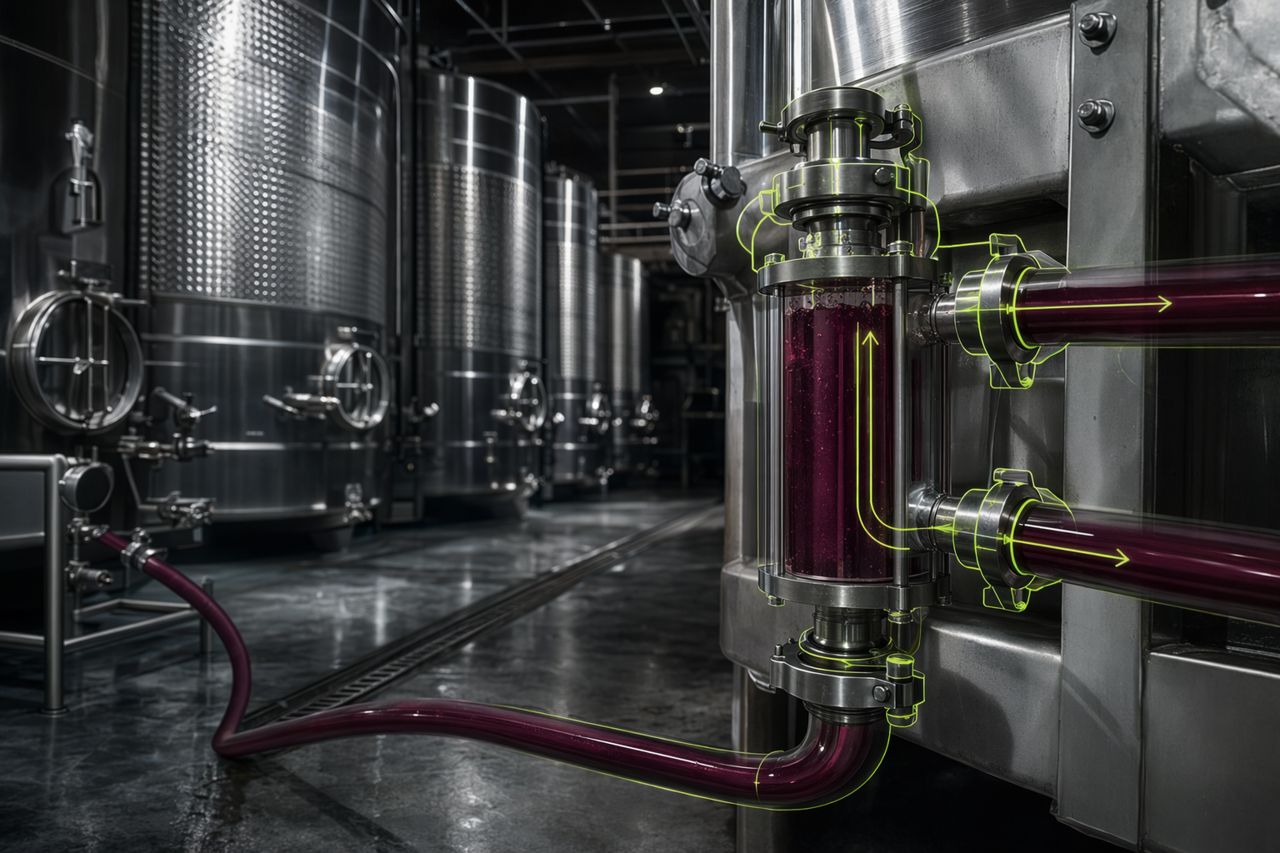
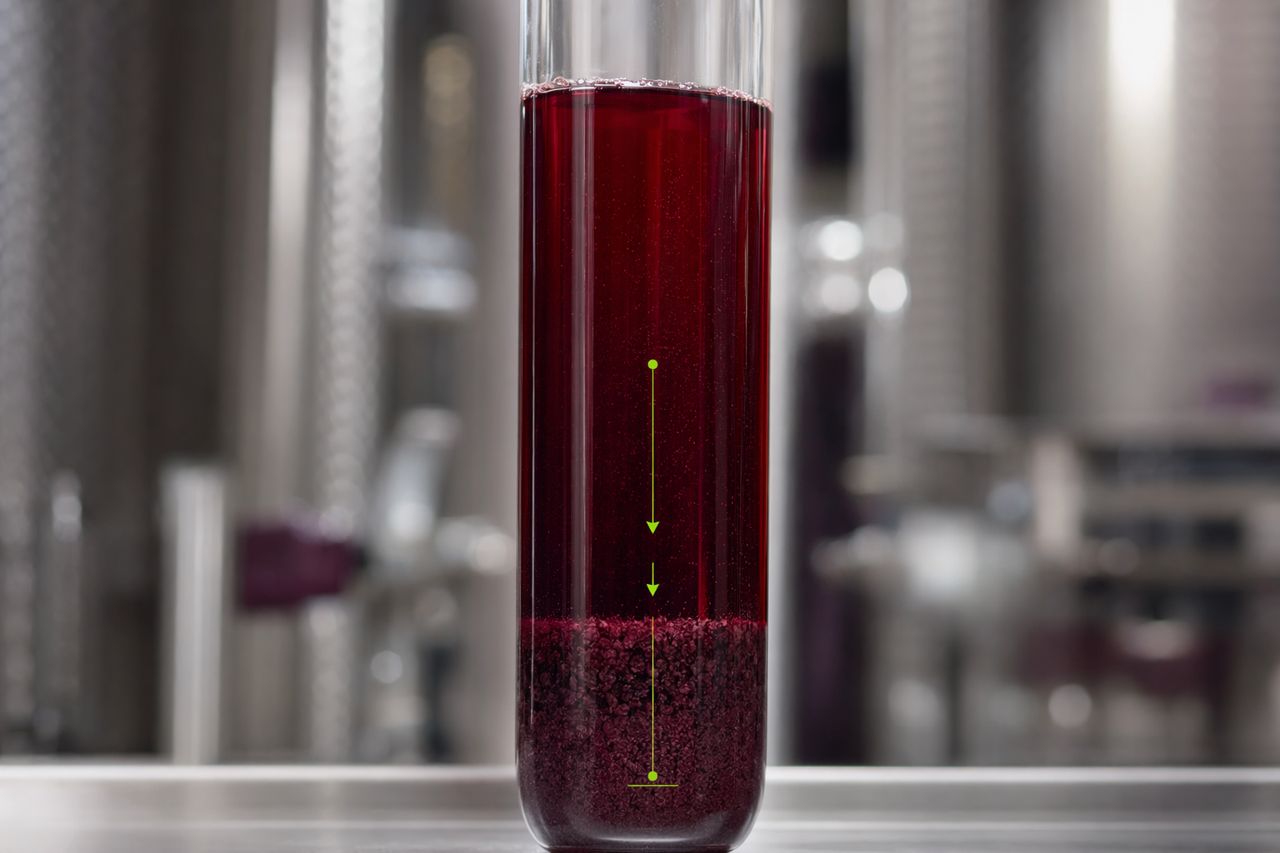
The result is familiar: a large lees bed that looks settled but breaks easily, pulls cloudy wine into the racking stream, and forces operators to choose between yield recovery and clarity discipline.
The hidden cost of a soft lees bed
A loose lees layer affects the cellar in four commercial ways.
1. More wine left behind
When the lees interface is unstable, operators stop the rack early to protect the lot. The retained wine may be recovered later, but it often requires extra handling, additional tank space, and more filtration effort. Across multiple tanks, small percentage losses become meaningful finished-wine volume.
2. Slower tank turns
Slow settling ties up stainless during the most expensive weeks of the year. Tanks waiting on clarification cannot be released quickly for incoming lots, blend staging, stabilization, or storage. In high-throughput wineries, this can become a scheduling constraint.
3. Higher filtration load
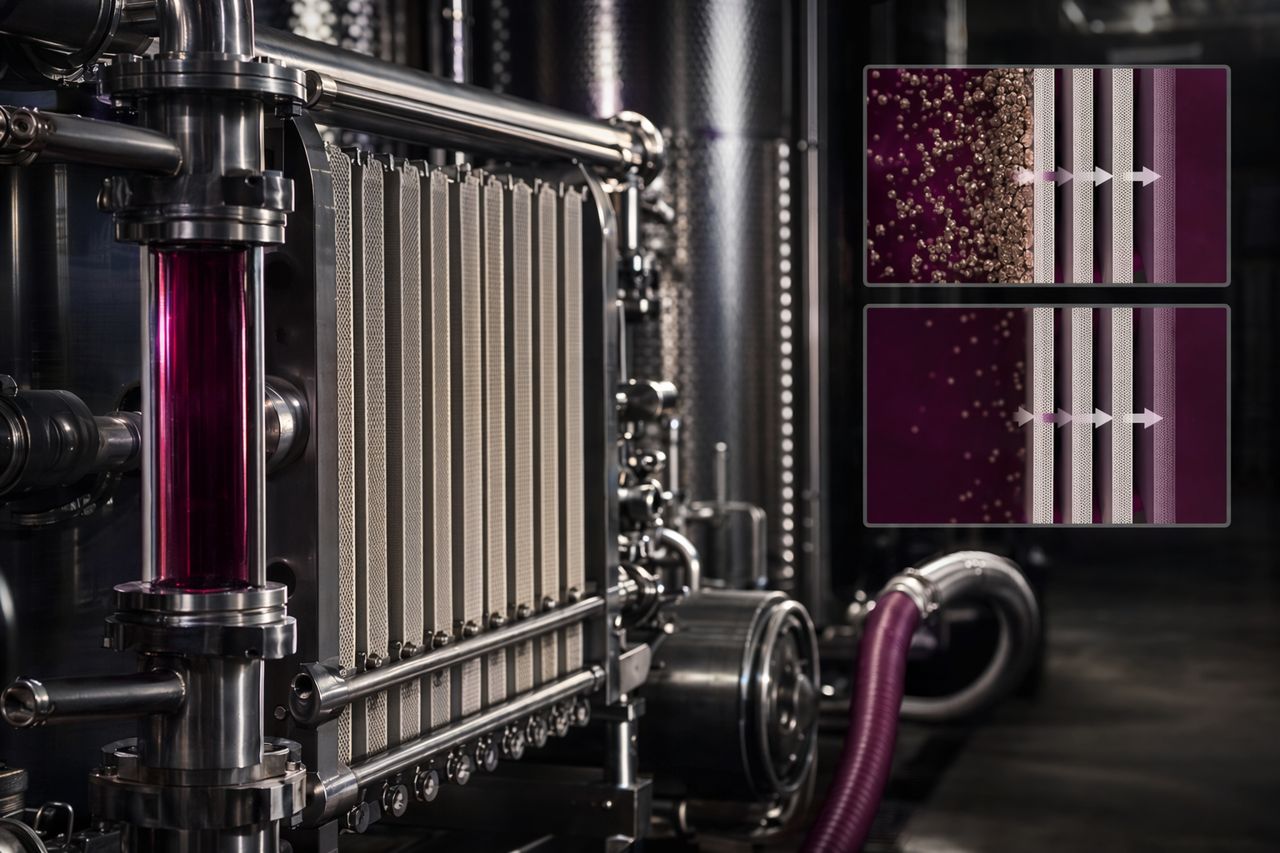
If fine solids are carried forward, the cost often appears at filtration. Shorter filter runs, higher pressure rise, membrane fouling, and additional pre-clarification steps can all trace back to insufficient settling performance upstream.
4. Greater sensory risk
Excessive solids carryover can complicate oxidation management, reduction risk, mouthfeel targets, and aroma definition. The goal is not to strip character. The goal is controlled clarification that protects varietal intent and gives the winemaking team cleaner options.
How enzymes support denser lees and cleaner racks
Cellar-grade enzyme programs help modify the colloidal and structural components that keep particles suspended. When selected and timed correctly, enzymes can improve juice release, reduce viscosity, support settling, and create a more compact sediment layer.
The commercial value comes from alignment with the process stage:
- At crush or maceration: Support juice liberation, press performance, and manageable solids separation.
- Before settling: Reduce suspension behavior so clarification can proceed within the available production window.
- During red processing: Balance extraction, press yield, and downstream clarification rather than optimizing one metric at the expense of another.
- Ahead of filtration: Reduce the burden of unstable haze and fine solids that shorten filter campaigns.
In practice, the right program can help the cellar pull cleaner wine from the same tank with less hesitation at the racking arm.
A production view of enzyme selection
Not every enzyme fit is the same. Industrial wineries need technical matching based on fruit condition, wine style, and equipment path. A high-aroma white program, a pressed rosé stream, and a thermovinified red line may all need different priorities.
Key selection questions include:
- Is the primary goal press yield, settling speed, lees compaction, extraction control, or filtration relief?
- Will the enzyme be applied to grapes, must, juice, fermenting wine, or finished wine?
- What contact time is realistic during harvest operations?
- Are the lots cold-settled, floated, centrifuged, crossflow filtered, or handled through multiple clarification steps?
- What sensory boundaries must be protected for the brand or buyer specification?
Véraison Current approaches enzyme recommendations from the cellar backward: define the racking and filtration outcome first, then build the application around the actual production flow.
Practical indicators to track
For B2B buyers, lees compaction should be evaluated with measurements the cellar already understands. Recommended production indicators include:
- Recoverable clean wine after first rack
- Settling time to target turbidity or internal clarity standard
- Height and firmness of lees bed after the same rest period
- Clarity stability during racking start, midpoint, and finish
- Filter throughput per lot or per campaign
- Frequency of rework, blending holds, or polish filtration
- Sensory comparison against untreated or standard-process lots
The strongest enzyme programs show value across more than one metric: cleaner separation, faster decisions, improved equipment utilization, and less wine trapped in the bottom of the tank.
Avoiding overcorrection
Clarification is not a race to neutral wine. Over-aggressive handling can reduce texture, disturb aroma balance, or create production dependencies that do not fit the house style. Enzyme strategy should be controlled, lot-aware, and validated against sensory targets.
The best outcomes usually come from disciplined trials during commercial processing: compare treated and standard lots, track racking recovery, watch filtration behavior, and review finished sensory impact with the winemaking and QA teams together.
What Véraison Current brings to the cellar
Véraison Current supplies enzyme solutions for industrial wine production with a focus on operational fit. We help production teams connect technical function to cellar economics: yield retained, tanks released, filters protected, and sensory risk reduced.
Our support can help you:
- Match enzyme functionality to variety, process, and equipment path
- Build harvest-ready application plans for high-volume cellar workflows
- Compare programs using practical production indicators
- Reduce trial noise with clear lot selection and evaluation criteria
- Align purchasing, winemaking, lab, and operations around measurable outcomes
Request a quote for your winery program
If lees compaction, racking loss, or filtration load is limiting throughput in your cellar, Véraison Current can help define an enzyme approach for your production conditions.
Request a quote through the on-site contact form and include your fruit type, process stage, annual volume, clarification method, and the outcome you want to improve. We will respond with a practical supply and technical fit discussion for your winery.